
September 5, 2025
MCPTotal's Security Overview
Learn how we built our MCP servers hosting capability on AWS with security by design in detail.
Read More
An MCP gateway sits between AI agents and the MCP servers they call: one place to decide which servers and tools agents may use, whose account each call runs as, and who called what.
Autonomous MCP Gateway runs your organization's MCP servers in isolated sandboxes instead of on laptops. An administrator adds each server once from a vetted catalog and allows or blocks its tools for everyone. People connect from Claude, ChatGPT or Microsoft 365 Copilot, each signing in with their own account where the app supports it; credentials stay in a token vault, and every connection is audited.
What an administrator sees for one app on a gateway, and the path a call takes: from the AI platform, through the gateway's tool policy, to the MCP server, with the member's own token added only at that moment.
AI platforms
Acme Gateway
Endpoint URL https://<your gateway>/github/mcp
Read-only · 3 tools
Write / Delete · 3 tools
Connected · each as themselves, scopes by their group
Token vault
Dana's GitHub token, added at the call. The agent never holds it.
GitHub's MCP server
A remote app runs at its provider.
A hosted app runs in an isolated sandbox of its own, one per server.
MCP is how AI agents reach real systems: it picks the tool, carries the data and makes the call. MCP servers often run on developers' laptops, in containers or in browser clients, outside any provisioning, each holding its own live credentials.
A gateway moves those servers to one governed endpoint: provisioned once, vetted before they are offered, and watched every time an agent connects.
MCP servers that stay on laptops are found by the endpoint agent, and can be blocked there. More in Shadow AI.
One click creates it, named after your organization. Most organizations need one; a second is for a separate set of apps, or the same app under another account.
Add an MCP server from the vetted catalog, or your own as a custom app. Each tool is allowed or blocked for everyone, with read-only and write or delete tools grouped so you can block every write at once.
Register the app's URL as a connector in Claude, ChatGPT or Microsoft 365. People reach it from inside the platform, signing in with their own account on apps set up that way, and every session is recorded. About 10 minutes in all.
Every hosted app in the catalog is scanned before it is offered: static and dependency analysis of its code, a score out of 10, and the full report one click away. A remote app, one its provider runs, is checked by its provider's domain instead.
Scanned and verified safe to host, or an official server on its provider's verified domain, which the badge names.
The server may reach or expose more data than its purpose suggests, and the report shows you where.
Its source code wasn't found. Not a detected threat, but nobody can review it, and the catalog says so.
Your organization decides which apps can be installed at all: each app allowed or blocked, the rest following a default. A blocked app never appears when someone adds an app. Your own MCP servers join the catalog as custom apps.
An MCP server is a set of tools: read a file, open an issue, delete a branch. The gateway decides, tool by tool, which ones agents may call.
Each tool is allowed, set to ask for approval, or blocked, with a default for the tools you haven't decided. A dynamic rule acts only on some calls: when an argument matches a pattern, the call is blocked or waits for approval.
Tools are allowed or blocked, alone or a group at a time: read-only, write or delete, and other. The organization's blocks always win, so no gateway can open a tool the catalog keeps closed.
The gateway signs agents in to the services behind each app without handing them a credential. OAuth tokens live in a dedicated token vault and are added only when a tool call needs them, so the agent, its prompt and its history never hold the secret.
A remote app that signs in with OAuth, a server its provider runs, can have everyone connect their own account, so each person gets their own data and permissions.
Scopes narrow what a member's sign-in may ask for. Set the most an app can ever request, carve it into presets such as read-only, and map your identity provider's groups to them, so a support team never consents to write access it doesn't need. Narrowing only removes scopes; nothing grants more than the baseline.
Every time an AI agent connects to a gateway, the Sessions tab lists it: the client and its version, when it connected and was last active, and the gateway it reached.
A gateway is for the tools everyone needs. For a person's own workflow, the MCP Cloud app gives each person a space: their own sandboxed set of MCP servers from the same catalog, at one endpoint.
A single, governed endpoint between AI agents and the MCP servers they use. Instead of each person running servers on their laptop with their own keys, the organization provides them once, decides which tools agents may call, keeps the credentials out of the agents' reach and records every connection.
A hosted app is an MCP server we run for you in an isolated sandbox of its own, walled off from your other MCP servers, other spaces and every other customer; with the gateway's tunnel it can also reach private systems on your own network. A remote app already runs elsewhere, usually at its provider; the gateway proxies and governs the connection to it, and an app that signs in with OAuth can have each member sign in with their own account.
Claude, ChatGPT and Microsoft 365 Copilot, through a connector an administrator registers once in the platform's admin console, so members need no setup. Any MCP client, such as Cursor, can connect to an app's endpoint URL directly.
An LLM gateway sits between applications and the models they prompt. An MCP gateway sits between agents and the tools they act through. If you already run a LiteLLM proxy, Autonomous checks its requests and answers too: see LLM gateway guardrails.
The endpoint agent finds them, with the AI agents that load them, and your policy can block a server or a single tool there too. Finding the AI tools nobody approved is Shadow AI.
Learn how we built our MCP servers hosting capability on AWS with security by design in detail.
Read More
We demystify AI guardrails, gateways, and everything in between, while clarifying what’s needed to ensure secure MCP operations.
Read More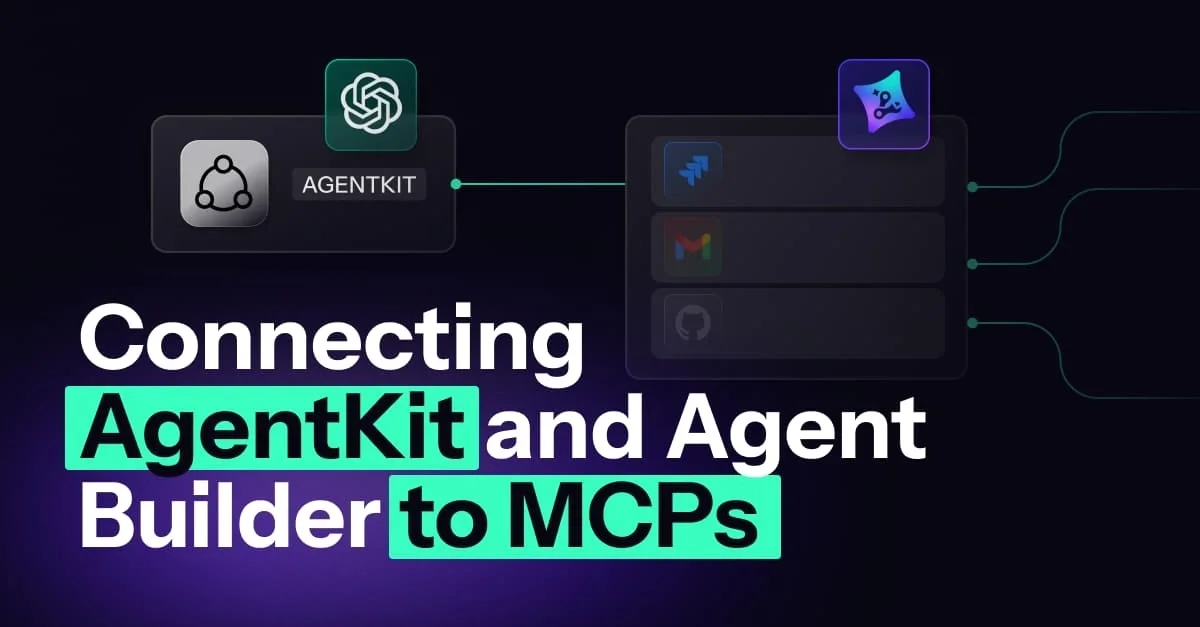
A quick walk-through showing how to connect OpenAI's AgentKit and Agent Builder to MCPTotal, running MCP servers in a few clicks.
Read MoreSee the gateway, the catalog and your agents' sessions on your own organization.
Book a demo